The Future of Living: A 2026 Guide to Prefabricated Houses in Turkey
Are modular homes the answer to Turkey's 2026 housing needs? From 72% energy savings to superior earthquake resistance, explore the comprehensive pros and cons of prefabricated living in the modern age.
The Advantages: Why Prefab is Winning in 2026
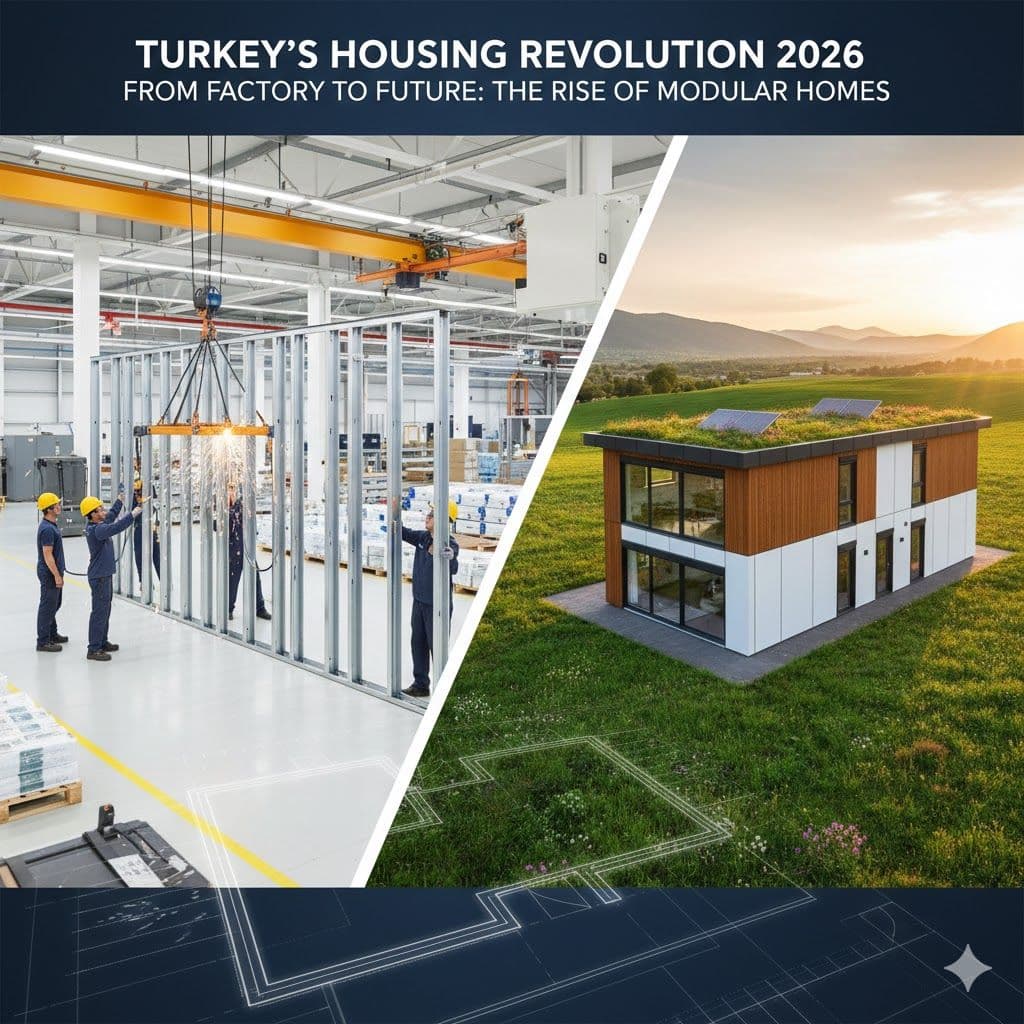
Prefabricated houses are no longer just "temporary" structures; they are cutting-edge examples of modular architecture.
Rapid Construction: While a concrete house can take over a year, a prefab home is manufactured and assembled in a fraction of the time, saving you months of labor costs.
Cost Efficiency: Even with 2026's rising material costs, prefab homes remain significantly more affordable than traditional builds due to factory-scale production.
Climatic Adaptability: Modern materials allow for customized insulation packages. Whether you are in the humid Black Sea or the snowy mountains of Erzurum, your home’s R-value can be tailored to the environment.
Ultimate Earthquake Safety: This is the "Gold Standard" for Turkey. Prefab homes are built on steel frames with flexible joints. During a tremor, they stretch and flex rather than crack, drastically reducing the risk of collapse.
Portability: Unique to this housing type, you can disassemble and relocate your home to a new plot of land if your lifestyle changes.
The Disadvantages: What to Watch Out For
Despite the benefits, there are technical details that require careful attention:
Physical Lifespan: While a concrete home might last 100+ years, a standard prefab home typically ranges from 50 to 70 years. However, premium materials can extend this.
Flexing in Double-Story Units: Poorly manufactured two-story models can feel "bouncy" on the upper floor. Always ensure your builder uses high-density steel frames.
Acoustic Challenges: If sound insulation is not high-quality (look for a minimum of 16-density styrofoam or rockwool), you may experience noise transfer between rooms.
Weather Resonance: Low-quality paneling can result in a "drumming" sound during heavy rain or wind.
Eco-Friendly Living & Net-Zero Standards
In 2026, modular homes are the vanguard of Green Architecture.
Waste Reduction: Factory construction reduces site waste by up to 52%, keeping 40% of construction debris out of Turkish landfills.
Energy Independence: Most 2026 models are "Solar Ready." By combining high-efficiency LED lighting with lithium-storage batteries, many homeowners now operate entirely off the grid.
Water Efficiency: Modular designs often include pre-installed rainwater harvesting systems and grey-water recycling, meeting Turkey’s latest environmental mandates.
The Legal Path: How to Secure Permits in 2026
A common misconception is that "mobile" means "no permit." In Turkey, a prefabricated house requires the exact same licensing as a concrete one.
The 5-Step Permit Process:
Zoning Check: Obtain the İmar Durumu (Zoning Status) from your local municipality or Special Provincial Administration.
Architectural & Static Projects: Hire an architect and engineer to prepare the file, including electrical and mechanical plans.
Cadastre Application: Get your document from the Cadastre Directorate to confirm plot boundaries.
License Petition: Submit your completed file to the municipality.
Construction Permit: Once approved (usually 3-4 weeks), assembly can begin immediately.
关键词
标签