The Essential Guide to Safely Buying Property in Turkey
Don't risk your investment. Learn the vital steps for buying property in Turkey, from checking title deed encumbrances to choosing the right secure payment method.
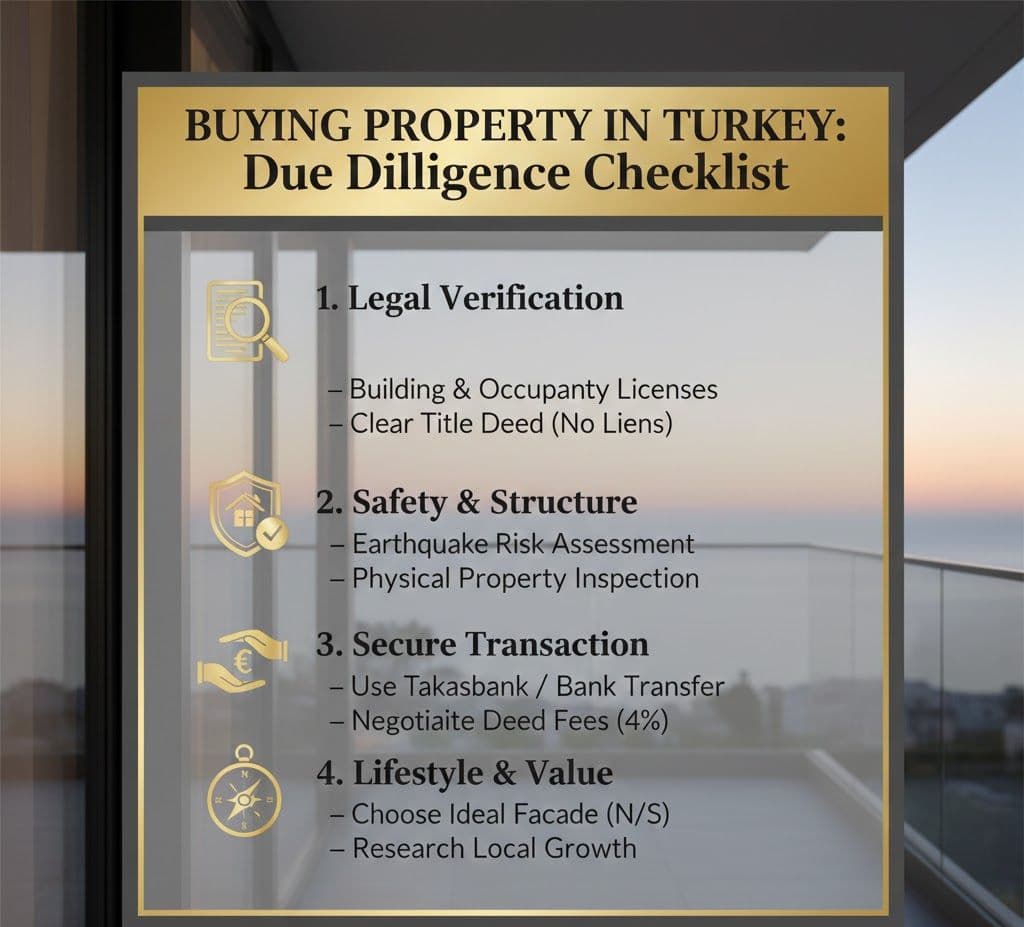
Avoid Costly Mistakes: The Ultimate Checklist for Buying Property in Turkey
Buying a home is one of life’s most significant investments. However, without a meticulous approach, even a minor oversight can lead to severe legal or financial risks. Whether you are a first-time buyer or a seasoned investor, navigating the Turkish real estate market requires a clear understanding of local regulations and building standards.
As your trusted partner, Property Superiors has compiled this essential checklist to ensure your investment is safe, profitable, and stress-free.
1. Verification of Legal Licensing
Never purchase a property without verifying its Building License. Turkish law prohibits the sale of unlicensed homes. Be wary of sellers who claim the licensing process is "almost finished" or suggest using a simple receipt. Investing in such projects is high-risk and may lead to uncompleted developments.
Key Tip: Always verify the Occupancy Certificate (Iskan) and Construction Servitude (Kat İrtifakı).
2. Assessing Earthquake Resilience
Turkey’s geography means certain regions are high-risk earthquake zones. Properties in these areas must comply with strict building codes. If a property is deemed high-risk under urban transformation laws, it may be subject to demolition and reconstruction. Always investigate the geological safety and construction quality of the building.
3. Physical Inspection vs. Digital Renders
While 3D "renders" and mini-models are helpful for visualizing off-plan projects, they can be misleading. If the building is complete, see the house yourself. Check for hidden issues like humidity in newly painted walls and verify the actual net vs. gross square footage.
4. Clearing Liens and Hypothecs
One of the most critical legal steps is checking for Hypothecs (mortgages) or Levy (seizure) records. If a developer has outstanding debts, the house could potentially be sold to satisfy those creditors even after you buy it. Ensure the Title Deed (Tapu) is free of all encumbrances.
5. Choosing the Right Facade
The direction your house faces impacts both your comfort and your utility bills:
South-Facing: Offers maximum daylight and natural heating during winter but can become very hot in the summer.
North-Facing: Generally more affordable. While they lack direct sunlight, they are often preferred in regions with extremely hot summers.
Navigating the Transaction: Fees and Payments
Title Deed Fees
The standard Title Deed transfer fee in Turkey is 4% of the declared property value. By default, this is usually split equally (2% each) between the buyer and the seller, though this can be negotiated. It is vital to declare the actual purchase price to avoid future tax penalties.
Secure Payment Methods
Avoid cash payments at all costs. Instead, use these secure methods:
Bank Transfer (EFT): Include the property address and a clear description in the payment notes.
Takasbank (Title Deed Interchange): A secure electronic system where funds are held in escrow and only released to the seller once the Title Deed transfer is finalized.
Blocked Check: The bank holds the funds, and the "block" is only removed after the notary procedures are complete.
Ключевые слова
Теги