The Complete Guide to Buying Property in Turkey: 2026 Edition
Thinking of buying in Turkey? From the $400k citizenship threshold to the latest 2026 tax exemptions, our guide covers everything you need to navigate the Turkish real estate market with confidence.
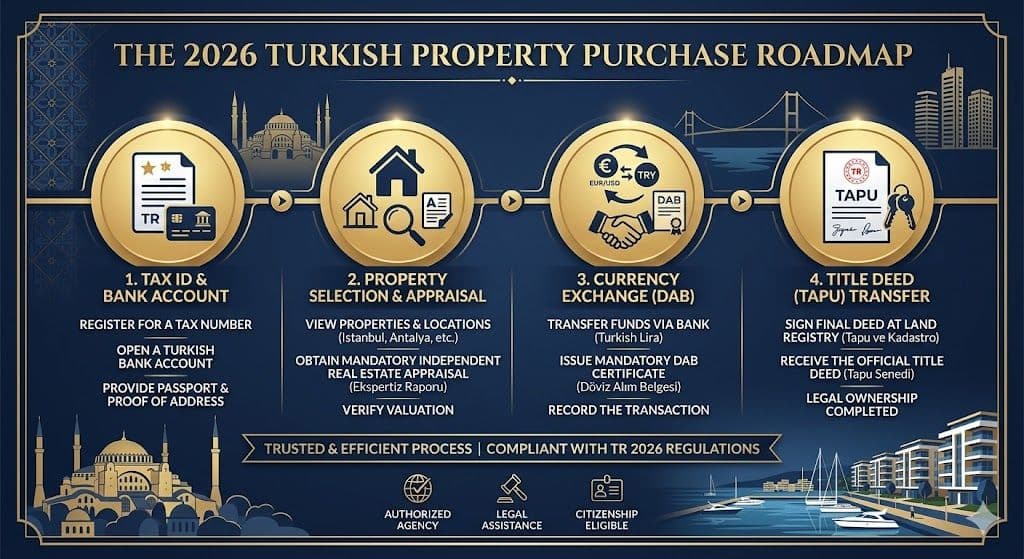
The Complete Guide to Buying Property in Turkey: 2026 Edition
Purchasing property in a foreign country can be a complex journey. As we move through 2026, Turkey’s real estate market has matured into a more transparent, technology-driven, and regulated environment. Whether your goal is a Mediterranean lifestyle, a strategic rental investment, or securing a second passport, this integrated guide provides the essential data you need for a successful transaction.
What Property Types Can Foreigners Buy in Turkey?
Turkey offers one of the most liberal ownership frameworks in the region. Almost all nationalities can own freehold property, with limited exceptions (such as citizens of Syria, Armenia, North Korea, Cuba, and Cyprus).
Apartments: From high-tech smart studios in Istanbul to luxury beachfront flats in Antalya.
Villas: Detached homes with private gardens, highly popular in coastal regions like Bodrum and Fethiye.
Land (Agricultural & Construction): Foreigners can own up to 30 hectares of land. For construction plots, a development project must be submitted to the relevant Ministry within two years of purchase.
Commercial Assets: This includes shops, offices, hotels, and even large-scale projects like malls or private schools.
Farms: Rural estates and agricultural lands are open for investment, particularly in the fertile Marmara and Aegean regions.
Strategic Hotspots for 2026
Where you buy is just as important as what you buy. Here are the top-performing cities in 2026:
Istanbul: The economic heart. In 2026, the focus has shifted toward urban transformation areas like Kağıthane and Ümraniye, offering high rental liquidity.
Antalya: The "Capital of Tourism." It remains the primary destination for Europeans and Russians, offering the highest short-term rental yields via the "apart-hotel" model.
Ankara: The political center. Offers stable long-term value with property prices that are often more competitive than Istanbul.
Kocaeli & Sakarya: These "Green Cities" are preferred for their proximity to Istanbul (1-hour drive), offering lush nature and more affordable entry prices for large villas near Sapanca Lake.
Financial & Tax Checklist
Budgeting for your purchase goes beyond the sticker price. In 2026, ensure you account for:
Title Deed Transfer Tax: 4% of the declared value (customarily paid by the buyer).
VAT (KDV): Ranges from 1% to 20%.
Pro Tip: Foreigners making their first purchase in Turkey using foreign currency are generally exempt from VAT, potentially saving you up to 20%.
DAB Certificate: You must exchange your foreign currency for Turkish Lira via a Turkish bank to receive the mandatory Döviz Alım Belgesi (DAB) before the deed transfer.
Mandatory Appraisal: A government-approved valuation report is required for all foreign purchases to prevent price inflation.
Ключевые слова
Теги