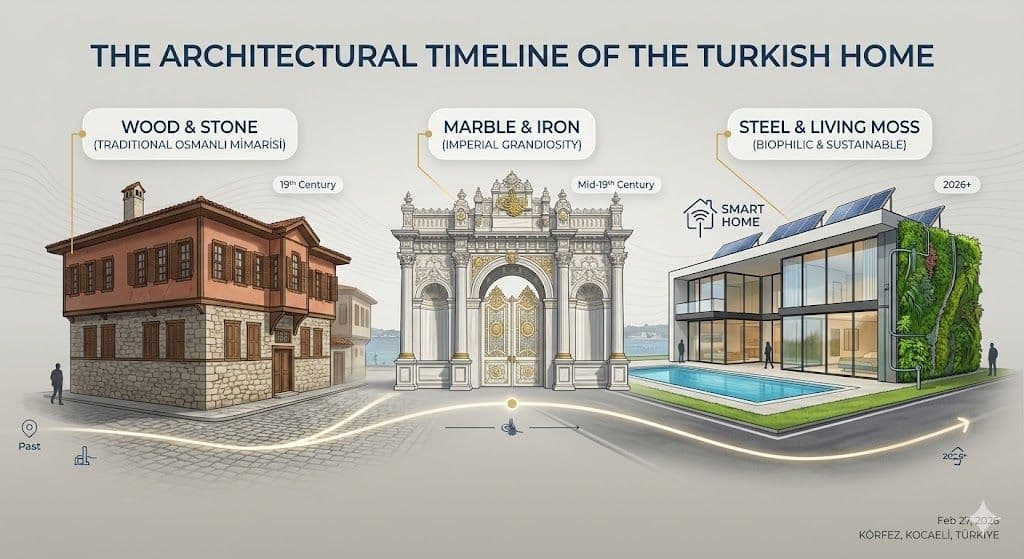
The Ultimate Guide to Tapu: Navigating Turkish Title Deeds in 2026
The Tapu is the heart of your property transaction in Turkey. From understanding the color-coded system to navigating the 2026 registration process, this guide ensures you hold the correct legal proof of ownership for your new home or investment.
The Ultimate Guide to Tapu: Navigating Turkish Title Deeds in 2026
For any foreigner looking to buy property in Turkey, the word Tapu will quickly become the most important term in your vocabulary. Issued by the General Directorate of Land Registry and Cadastre (Tapu ve Kadastro Genel Müdürlüğü), it is the only document recognized by law as proof of ownership.
What is a Tapu?
The Tapu is an official registry document that includes the owner's name, a photograph, and comprehensive details about the property’s location and size. In 2026, these documents are increasingly digital, featuring QR codes that allow owners to verify property details and location instantly via mobile devices.
The Anatomy of a Title Deed
When you receive your Tapu, it is essential to verify the following sections:
Taşınmaz Bilgileri (Property Info): City, district, and exact plot/parcel numbers.
Bağımsız Bölüm (Independent Section): Details on the specific floor, unit number, and land share.
Malik Bilgileri (Owner Info): The name of the owner(s) and their respective shares.
Edinme Sebebi (Reason for Purchase): Legal background of the transfer (e.g., sale).
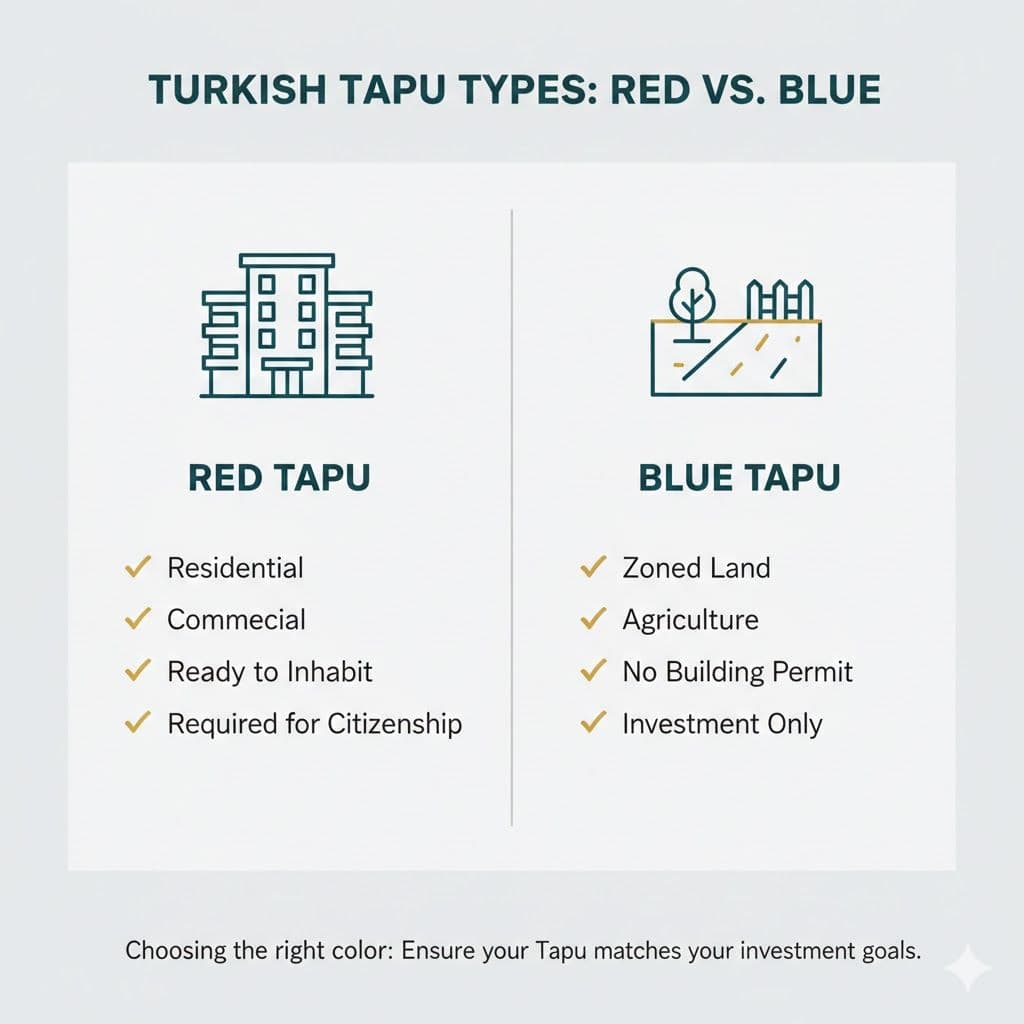
The Color Code: Red vs. Blue Tapu
The color of your title deed tells you exactly what kind of property you own.
1. Red Tapu: Residential & Commercial
The Red Tapu is issued for built-up properties. It signifies that the unit is an independent, usable space.
Kat İrtifakı (Floor Easement): Issued for buildings still under construction. It proves you own a specific unit in a project that has been approved.
Kat Mülkiyeti (Full Ownership): The gold standard. Issued after the building is finished and the Iskan (Habitation License) is obtained.
2. Blue Tapu: Land & Agriculture
The Blue Tapu is reserved for undeveloped land.
Arsa (Zoned Land): Land that is ready for construction according to urban planning.
Arazi/Tarla (Agricultural Land): Land meant for farming. Foreigners are generally restricted from building residential homes on these plots without complex permits.
The 2026 Roadmap to Ownership
The process for obtaining your Tapu has been streamlined but requires strict adherence to new 2026 regulations.
DAB Certificate: You must convert your foreign currency to Turkish Lira via a bank to receive this mandatory document.
Valuation Report: A government-approved appraiser must confirm the property's value.
DASK: Compulsory earthquake insurance must be active.
Appointment: Both parties meet at the Land Registry Office (or provide Power of Attorney) to sign the official registry.
Common Questions About Tapu
Can multiple people share a Tapu? Yes. Turkish law allows for "shared ownership" (Hisseli Tapu), where the specific share of each owner is clearly defined on a single document.
Can I put a Tapu in my child's name? Yes, provided the parents provide notarized consent and follow specific legal guardianship rules.
Is the "Citizenship Tapu" different? The document looks the same, but for citizenship, a "No-Sale for 3 Years" annotation is officially added to the registry records.
Protecting Your Investment
Never accept a "notarized contract" as a substitute for a Tapu. While contracts are useful for off-plan projects, they do not transfer legal ownership. Only the Land Registry Department can issue the final proof of your right to the property.
Keywords
Tags