Neoclassical Architecture in Turkey: A Journey Through Symmetry and Stone
Explore the majestic world of Neoclassical architecture in Turkey. From the Istanbul Archaeology Museum to Ankara’s Parliament, discover why these simple, symmetrical structures remain vital today.
Neoclassical Architecture: The Art of Timeless Grandeur in Turkey
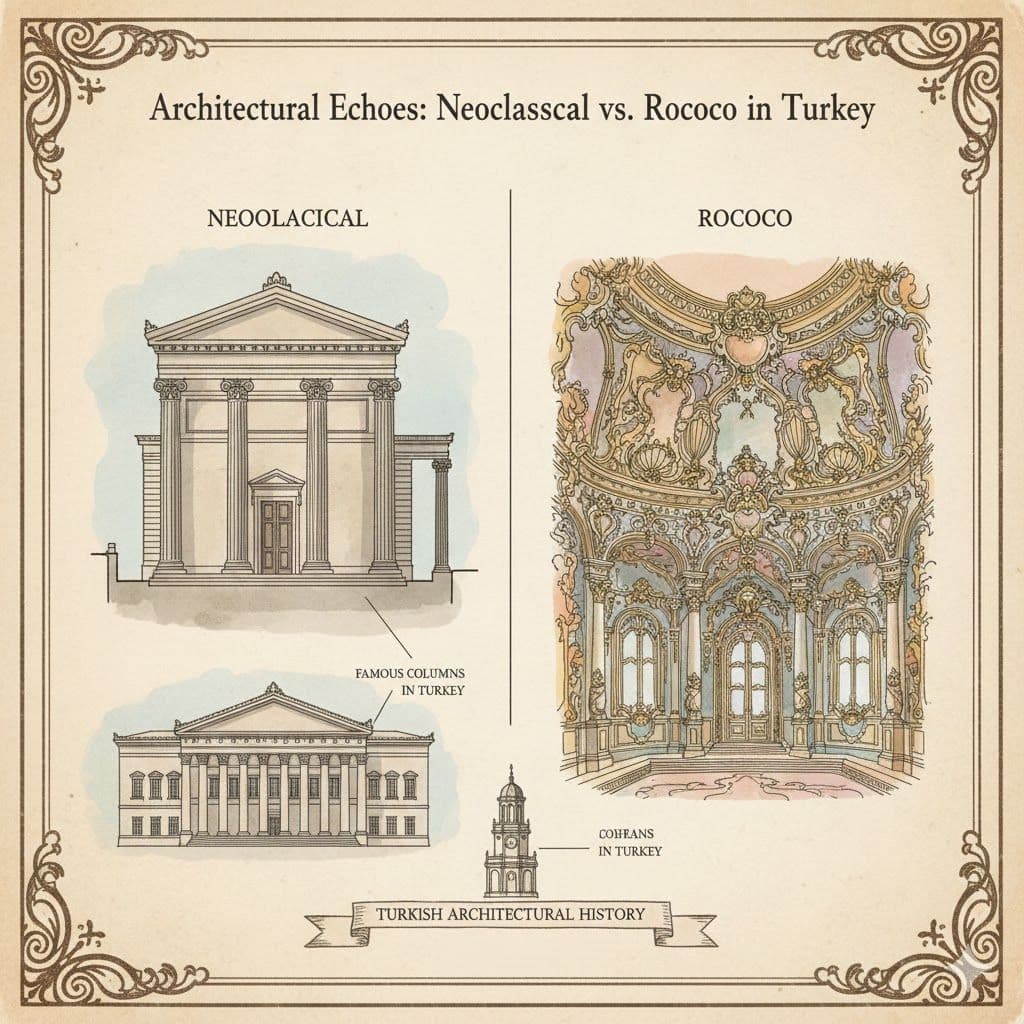
Neoclassical architecture, which emerged in the 18th century as a response to the ornate excesses of the Rococo and Baroque periods, is defined by its pursuit of simplicity, symmetry, and monumental scale. Drawing heavy inspiration from ancient Hellenic and Roman traditions, this style uses the "language" of the past to convey modern ideals of stability and reason.
In Turkey, the influence of Neoclassicism arrived during the late Ottoman Westernization period and continued to shape the identity of the young Republic. Today, these structures stand as pillars of history, blending European architectural movements with local Turkish identity.
Key Characteristics of Neoclassical Style
To identify a Neoclassical building, look for these defining "E-A-T" factors of architecture:
Grand Columns: Often using Doric, Ionic, or Corinthian orders to provide a sense of verticality.
Symmetry: Balanced layouts where the left and right sides are mirror images.
Simplistic Walls: A departure from over-decoration, focusing on smooth surfaces and clean lines.
Domed and Gable Roofs: Structural elements that evoke ancient temples or classical villas.
Public Function: Most Neoclassical structures were designed as museums, parliaments, or government offices to project authority.
Iconic Neoclassical Landmarks in Turkey
Turkey hosts a wealth of Neoclassical monuments that are essential for any cultural tour. Here are the most prominent examples:
1. Istanbul Archaeology Museum
Built in the late 19th century by architect Alexandre Vallaury, this is one of Turkey’s most significant Neoclassical achievements. Its facade, featuring four massive columns and a temple-like pediment, was inspired by the Alexander Sarcophagus housed within its walls.
2. The Third TBMM Building (Ankara)
The current Grand National Assembly of Turkey is a masterpiece of modernized Neoclassicism. Designed by Clemens Holzmeister, it emphasizes durability and stability. The symmetrical wings, high porticoed entrance, and use of local marble embody the monumental strength of the Republic.
3. Tophane (Nusretiye) Clock Tower
Constructed in 1848 by the famous Balyan family of architects, this tower is a three-story Neoclassical landmark in Istanbul. Its clear vertical lines and classical proportions make it a standout example of late Ottoman westernized design.
Keywords
Tags