Digital House Hunting: How to Decode Turkish Real Estate Ads Like a Pro
Don't be fooled by wide-angle lenses! Learn how to spot "earthquake-ready" buildings, verify locations via digital street views, and understand the new 2026 mortgage rules before you book a flight. Your dream home is only a click away—if you know where to look.
The Story Behind the Lens: Analyzing Ad Photos
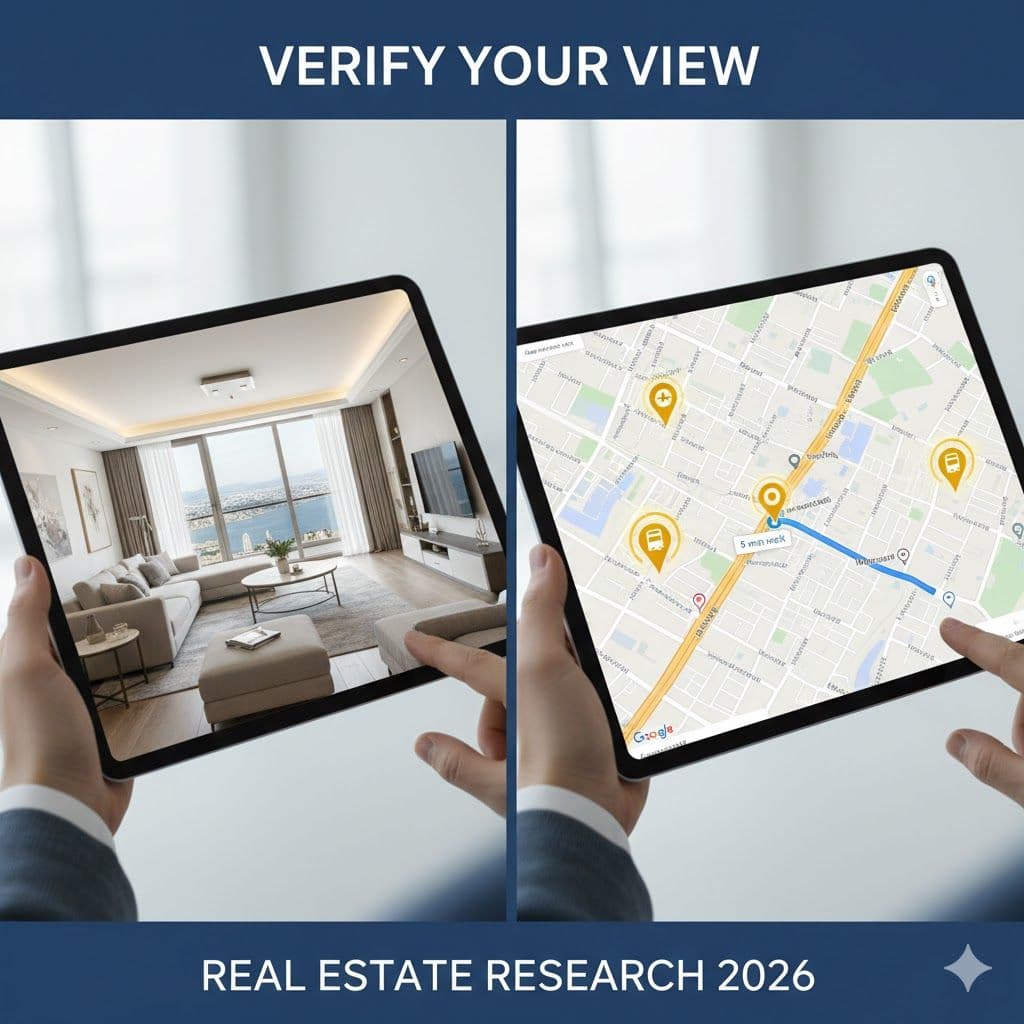
In 2026, professional photography and 3D virtual tours are the industry standard. However, you must look beyond the staging.
Sunlight Exposure: Check the shadows. Does the apartment get natural light, or will it be dark by 2:00 PM?
Condition of Infrastructure: Zoom in on kitchen cabinets, floor coverings, and bathroom fixtures. High-resolution photos can reveal the quality of materials—essential for assessing the long-term value of a property.
Pro Tip: Look for a "Matterport" or virtual tour link. If a listing only has three blurry photos, it often signals a property that hasn't been well-maintained.
Beyond the Pin: Verifying the Location
A listing may claim to be in "Beşiktaş," but it could be on the very edge of the district.
Street View Verification: Use the Google Maps Street View feature to walk the neighborhood digitally. Check for narrow streets, proximity to busy intersections, or the presence of nearby construction.
The "Urban Transformation" Factor: If the surrounding buildings look very old while yours is brand new, you are likely in an urban regeneration zone—this usually means the neighborhood's value will rise significantly over the next five years.
Transit Connectivity: Verify the walking distance to the nearest Metro or Metrobus station. In Istanbul, proximity to rail transport can increase a property's value by 15-20%.
Building Specs: Floor Choice and Safety
The "Intermediate Floor" (Ara Kat) remains the most sought-after choice in Turkey due to better insulation and heating efficiency.
Earthquake Compliance: In 2026, always check for the "Earthquake Regulation" (Deprem Yönetmeliği) status. Buildings constructed after 2018 follow the strictest safety codes.
The Basement Bargain: While basement or garden-level floors are cheaper, ensure they have proper damp-proofing and security. These are often great options for short-term rental investments if located near tourist hubs.
Keywords
Tags